Falling mortgage rates could mean it's time to consider refinancing—again. But before deciding, find out whether it's a good option for you. Learn more from this article.
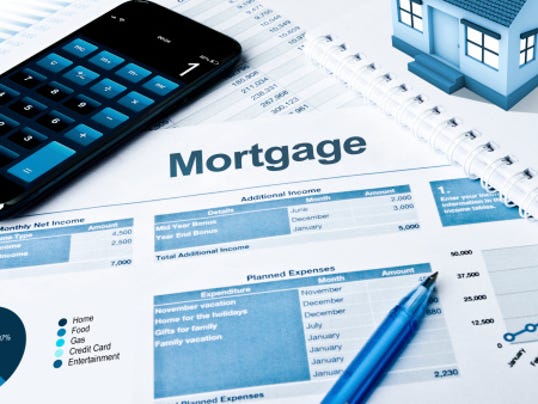 |
| Refinancing may make sense since mortgage rates are at historic lows. | Image Source: usatoday.com |
Interest rates on home loans are historically low. That means now is the time to dig out your mortgage loan paperwork and consider whether refinancing is right for you.
Five years ago, the government started injecting trillions of dollars into the U.S. economy. Conventional wisdom suggested that rising interest rates were soon to follow. Some even predicted the collapse of the dollar and hyper-inflation. Instead, inflation is down, the dollar is the strongest it's been in 10 years, and interest rates have fallen to the lowest levels in decades.
When refinancing, you take out a new, lower-interest loan to pay off the old one. Here's how to find out whether it's a good option:
First, check the current interest rate on your mortgage loan. Let's assume you have a balance of $200,000, with monthly principal and interest payments of $1,013 at a rate of 4.5%.
Next, shop around. Call two or three mortgage brokers and find out the interest rate you can obtain on a new loan. They'll ask for your household income, the value of your house and the current balance on your mortgage. If you don't know how much your home is worth, contact your local property tax office for an assessed value.
Ask the brokers to give you the interest rate and payments on a mortgage similar to the number of years left on your current loan. Also ask about a shorter-term loan, which usually has a lower interest rate.
When shopping for a new mortgage, you may be tempted to reduce your payments even more by lengthening the term of your new loan. While the benefit is more spending money per month, you can end up paying more in interest. I strongly suggest obtaining a new mortgage that is equal to or less than the number of years remaining on your current loan.
Then, get an estimate of all other costs, including title insurance, an appraisal and a closing fee. Lenders sometimes charge "points," or origination fees, which are also part of your closing costs. One point equals 1% of the loan's value. Mortgages described as "no-cost" or "zero points" do not carry this cost, but the interest rate may be higher.
Now, calculate how long it will take to recover your refinancing costs. Getting a new loan makes financial sense if you are able to break even soon.
Let's assume you find out you can obtain a new loan with a similar term at 3.65%. The monthly payments are $915, and the closing costs are $1,900. The new payment is $98 less than your current $1,013. Divide the $1,900 closing cost by the $98 monthly savings. The answer, 19, is your break-even point, the number of months you need to keep the house to recoup the costs.
If your break-even point is 24 months or more, or if you intend to sell your home in the next two years, refinancing may not make sense. No one knows what curves life may toss us, and looking two years ahead is my comfort level.
Remember that a lower rate doesn't automatically mean refinancing is in your best interest. How much you save monthly, your closing costs and how long you plan to live in your home are key variables in determining whether you should refinance your mortgage.
Visit this The Remada Company blog for more tips on mortgage application and other related articles.


